When you sit down to write your dissertation or thesis, the problem statement is one of the most critical components you’ll craft. It’s the foundation that justifies why your research matters and why readers should care about your findings. Yet many students struggle with this section, unsure whether they’re simply identifying a gap in the literature or articulating something more substantial.
Understanding What a Problem Statement Really Is
While some universities define the problem statement as merely the gap in the literature, a truly compelling problem statement goes much deeper. Yes, identifying unstudied territory matters, but the strongest problem statements demonstrate why studying this topic is genuinely important to the field. They connect your research to real-world consequences, affected populations, or pressing issues that demand attention.
Think of your problem statement as the answer to the question: “So what?” Why should anyone invest time reading your 200-page dissertation? What’s at stake if this problem remains unaddressed?
The Anatomy of an Effective Problem Statement
A strong problem statement for qualitative research typically includes three essential elements:
- The Issue: What’s going wrong? This might be a percentage, a trend, or a documented challenge. It establishes the concrete reality of the problem.
- The Population: Who is affected? Your problem statement should make clear which groups experience this issue.
- The Connection: How does your research topic relate to addressing or understanding this problem? This is where you link your specific qualitative focus to the broader issue.
Learning from Examples
Let’s examine how these elements come together in practice:
Teacher Collaboration Study: The problem isn’t just that teacher collaboration hasn’t been studied in rural Appalachian elementary schools. The problem is that a significant percentage of teachers leave the profession every year, and research shows that teacher collaboration serves as a mitigating factor in teacher attrition. Suddenly, studying collaboration patterns becomes about addressing a staffing crisis that affects students’ educational continuity.
Parent Engagement Research: Rather than simply noting that parent engagement in charter schools needs more study, the problem statement establishes that substantial percentages of students aren’t proficient in core subjects, and parent engagement has been shown to improve academic outcomes. The research now connects to student achievement gaps.
Project-Based Learning Study: This example demonstrates sophistication by acknowledging existing research (project-based learning improves student outcomes) while identifying the problem: despite these benefits, high school science teachers report inadequate professional development and support, leaving us with limited understanding of their lived experiences with implementation. The problem isn’t just what we don’t know, it’s the disconnect between what works and what teachers actually experience.
Pediatric Nursing Research: Here, the problem is straightforward but powerful: pediatric nurses in urban hospitals experience high burnout rates. The consequences are impacts on patient care, staffing shortages, and nurse wellbeing which make the importance of understanding their experiences immediately apparent.
Practical Steps for Crafting Your Problem Statement
Start by asking yourself these questions:
- What measurable issue or challenge exists in your field? Look for statistics, documented trends, or widely acknowledged problems. These concrete markers give your problem statement credibility and urgency.
- Who experiences this problem? Be specific about the population affected. This helps readers understand the scope and significance of the issue.
- How does your research topic connect to this problem? Your qualitative study might not solve the problem directly, but it should offer understanding, insights, or perspectives that contribute to addressing it. Make this connection explicit.
- Why does this matter now? Consider whether there are timely factors such as policy changes, emerging trends, or urgent needs that make your research particularly relevant.
Common Pitfalls to Avoid
Don’t confuse a gap in the literature with a problem. Just because something hasn’t been studied doesn’t automatically make it important. Always connect the unstudied topic to a real-world issue.
Avoid vague statements. Phrases like “more research is needed” or “little is known about” don’t constitute a problem statement. Ground your statement in specific, documented challenges.
Don’t oversell your study’s impact. Your qualitative dissertation will contribute understanding, not necessarily solve systemic problems. Be clear about what insights your research can reasonably offer.
The Bottom Line
Your problem statement should make a reader think, “Yes, this research needs to happen.” It bridges the gap between academic inquiry and real-world significance, transforming your dissertation from an exercise in scholarship into a meaningful contribution to your field. Take the time to craft this section carefully, using concrete data to establish the problem and clear logic to connect it to your research focus. When done well, your problem statement becomes the compelling justification that carries readers through your entire study.
Need Help?
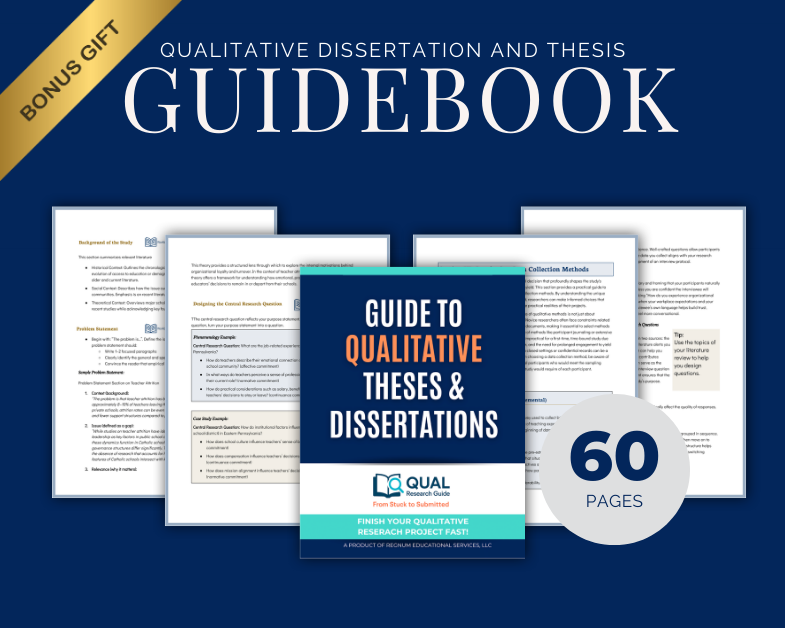
The Guide to Qualitative Dissertations and Theses Guidebook + Workbook duo is designed for graduate students navigating the messy middle of a qualitative dissertation or thesis. Whether you’re overwhelmed by Chapter Two, unsure how to write your methodology, or paralyzed by feedback, The Qualitative Research Guide breaks it down into doable steps—with no fluff, no jargon, and no judgment.